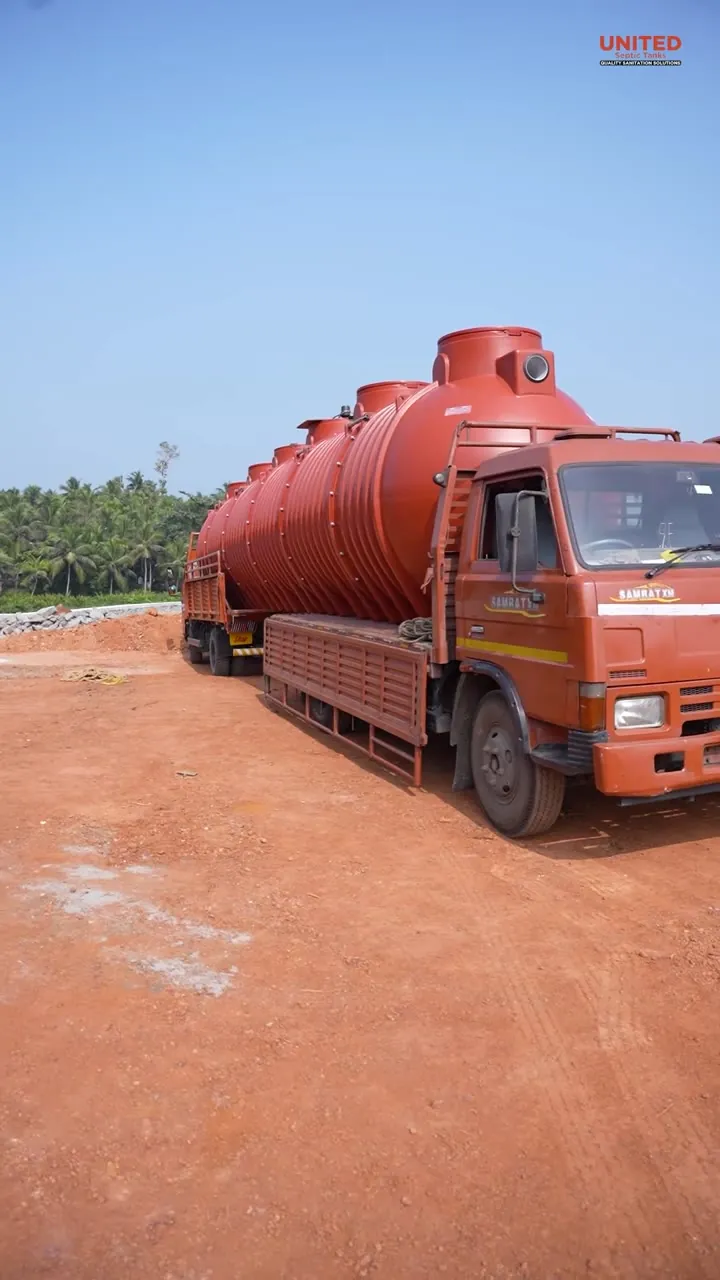
UNITED Polyethylene Septic Tank
Single-moulded, 3-chamber polyethylene tanks in 12 models, up to 34,000 L.
UV stabilisedSalt-resistantTerracotta / Black

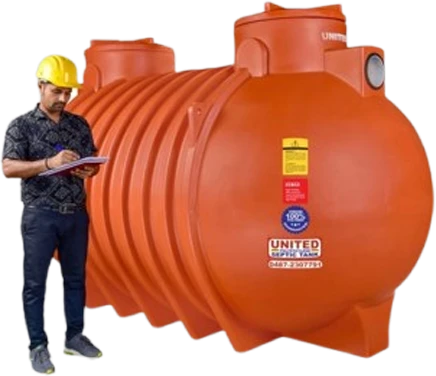
Single-moulded, 3-chamber polyethylene tanks in 12 models, up to 34,000 L.
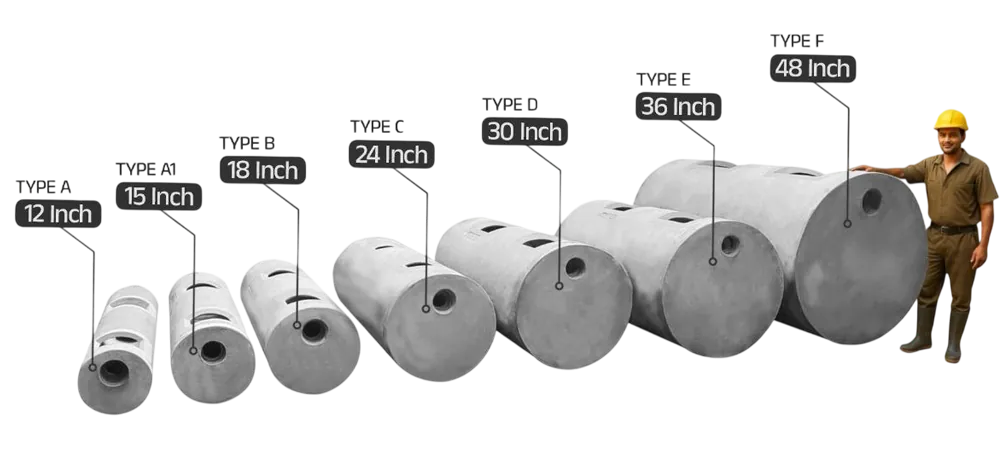
Centrifugally moulded reinforced concrete tanks in 7 sizes, 12″ to 48″.
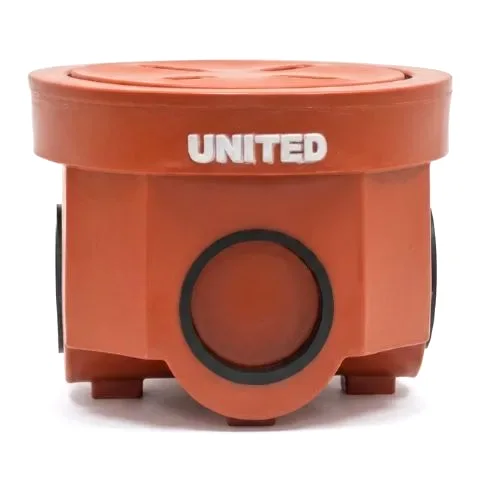
One outlet and three inlet provisions, for 110 mm and 160 mm pipelines.
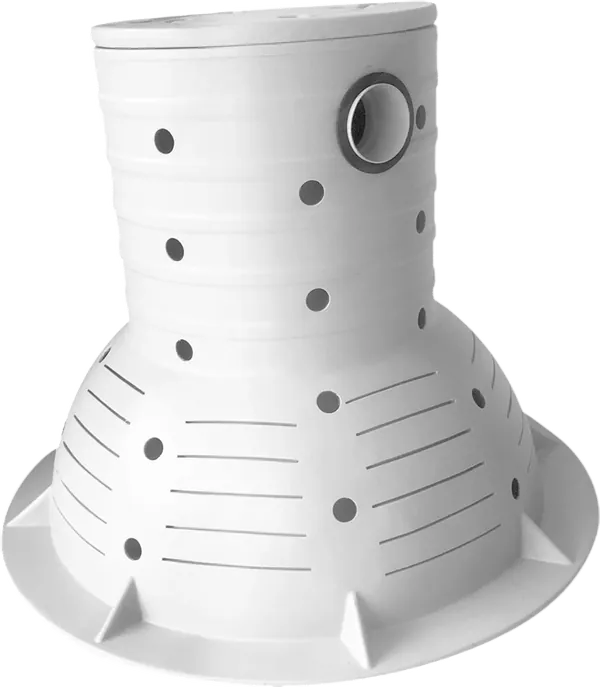
Cylindrical and bell-shaped rings for dispersing treated effluent.
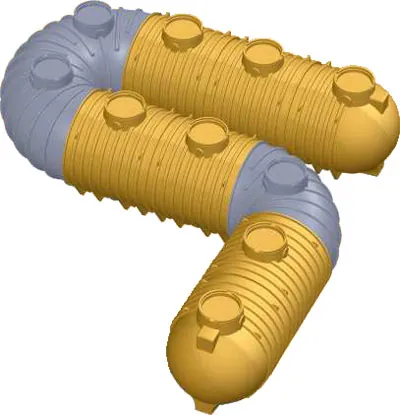
Pre-plumbed 5,000 L polyethylene modules, combined to the volume you need.
UNITED Sanitation Devices is the lead venture of UNITED Group. We manufacture polyethylene and RCC septic tanks, inspection chambers, soakaway rings and modular underground tanks, and thousands of UNITED septic tanks have been installed all over India.
Single-moulded, 3-chamber polyethylene tanks in 12 models, up to 34,000 L.
Centrifugally moulded reinforced concrete tanks in 7 sizes, 12″ to 48″.
One outlet and three inlet provisions, for 110 mm and 160 mm pipelines.
Cylindrical and bell-shaped rings for dispersing treated effluent.
Pre-plumbed 5,000 L polyethylene modules, combined to the volume you need.
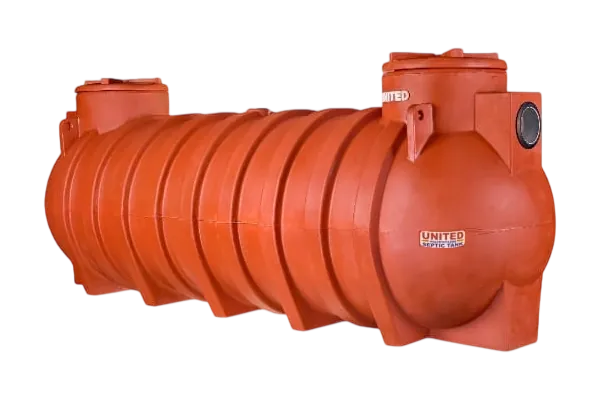
The tank is made of polyethylene in a single moulding, so there are no joints to fail. Its high wall thickness withstands the load and pressure of the earth to a great extent.
The tank's size and 3-chamber design play a very important role in processing waste. A septic tank is a processing tank, not a dumping tank. Bacteria do the work, and the chambers give them room to do it.
Two manholes are provided for convenience. Cover them with the lids supplied and the tank is ready to use.
Fitting the tank is simple: connect the drain line to the inlet and the outlet to the soak pit. The salt-resistant, non-degradable plastic suits saline areas.
Illustration only. Site preparation varies; see installation guidance or ask our team.
Key specifications at a glance. Open any product for full model tables, drawings and FAQs.
Single-moulded, 3-chamber polyethylene tanks in 12 models, up to 34,000 L.
| Models | 12 (Type 1A to 2H4C) |
|---|---|
| Diameter | 600 – 2000 mm |
| Largest tank | 34,000 L |
| Chambers | 3 to 6 |
Centrifugally moulded reinforced concrete tanks in 7 sizes, 12″ to 48″.
| Types | 7 (Type-A to Type-F) |
|---|---|
| Inner diameter | 12″ – 48″ (300 – 1200 mm) |
| Wall | 25 – 55 mm |
| Cells | 3 |
One outlet and three inlet provisions, for 110 mm and 160 mm pipelines.
| Sizes | 110 mm (4″) · 160 mm (6″) |
|---|---|
| 110 mm chamber | 0.4 m W × 0.3 m H |
| 160 mm chamber | 0.5 m W × 0.4 m H |
| Connections | 1 outlet + 3 inlets |
Cylindrical and bell-shaped rings for dispersing treated effluent.
| Types | Cylindrical · Bell-shaped |
|---|---|
| Cylindrical | Ø 1.0 m × 0.75 m H |
| Bell-shaped | Ø 0.5 → 1.2 m × 0.75 m H |
Pre-plumbed 5,000 L polyethylene modules, combined to the volume you need.
| Per module | 5,000 L |
|---|---|
| Volume | Modules combined as required |
| Lids | Double-walled |
| Temperature | −35 to +60 |
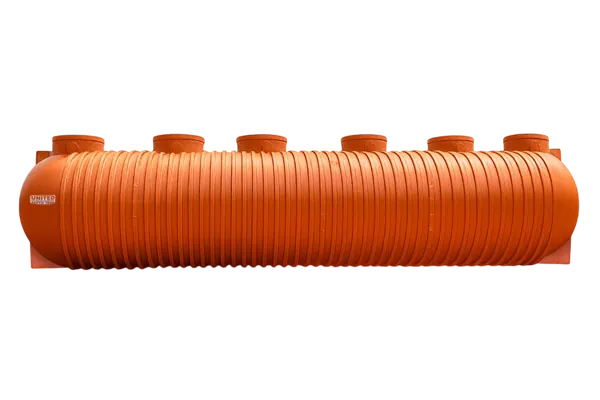
UNITED's large-volume polyethylene range: 2000 mm in diameter, for housing and community projects that need more capacity.
Compared against conventional site-built masonry tanks.
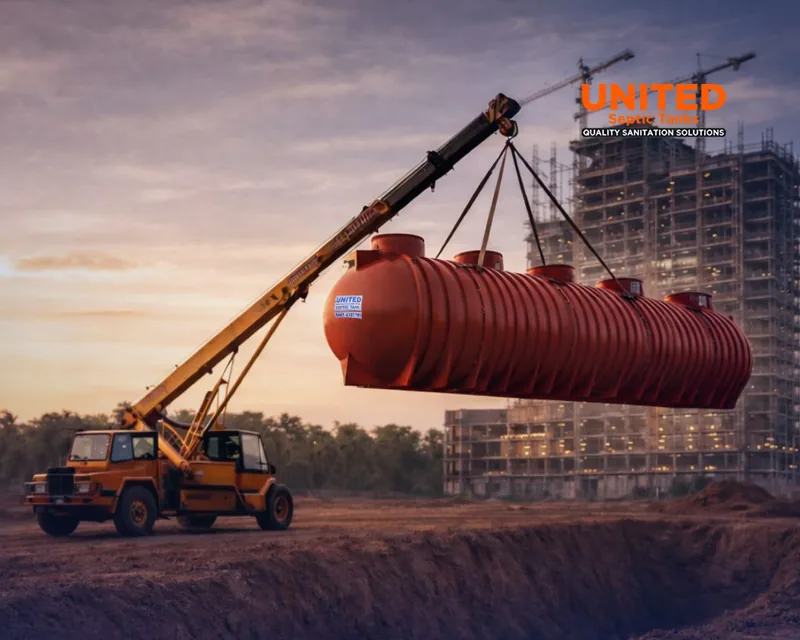
Large-volume polyethylene tanks up to 34,000 L, modular tanks combined to the volume you need, and custom-built models for community use.
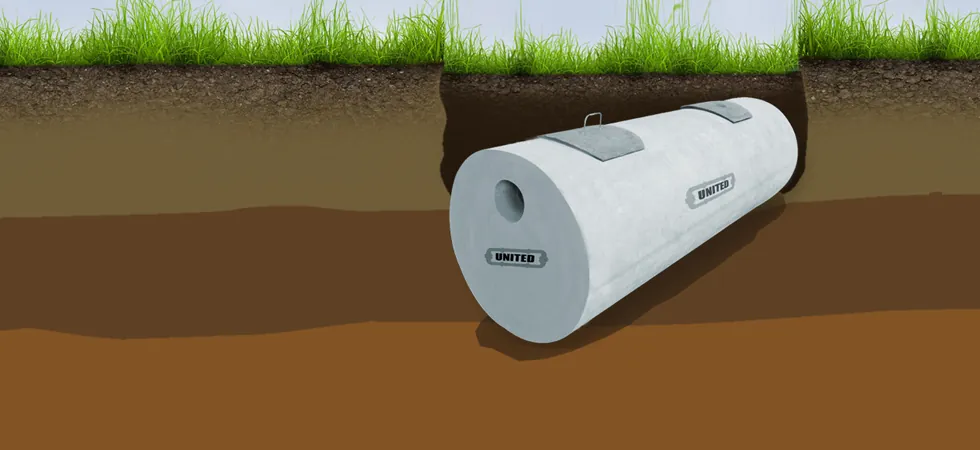
Polyethylene and RCC septic tanks sized for homes, with inspection chambers and soakaway rings to complete the system.
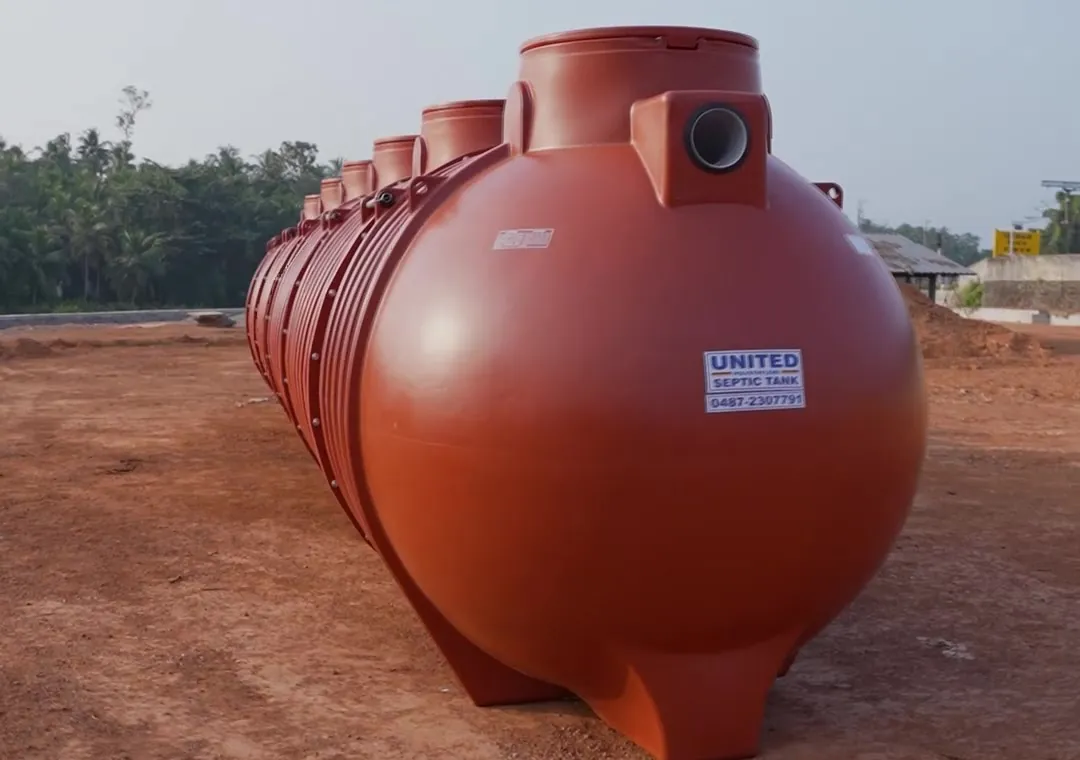
The tanks are made of salt-resistant, non-degradable plastic, which makes them more suitable for saline soils.
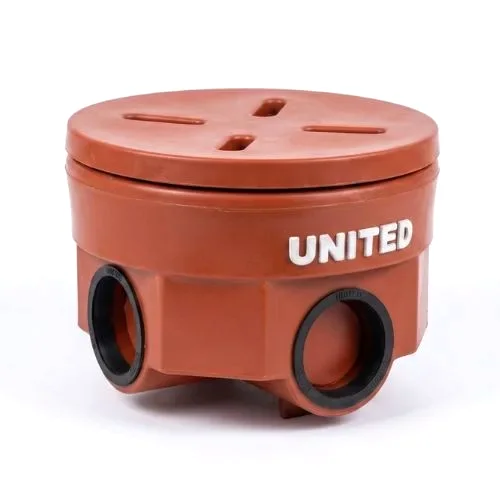
Inspection chambers that accept pipelines from multiple directions, in 110 mm and 160 mm sizes.
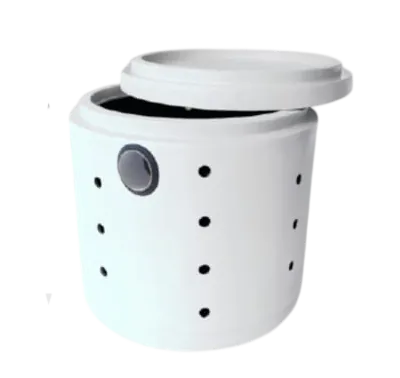
Soakaway rings that complete the system after the septic tank, in cylindrical and bell-shaped forms.
Tell us about your project and our team will recommend a configuration.
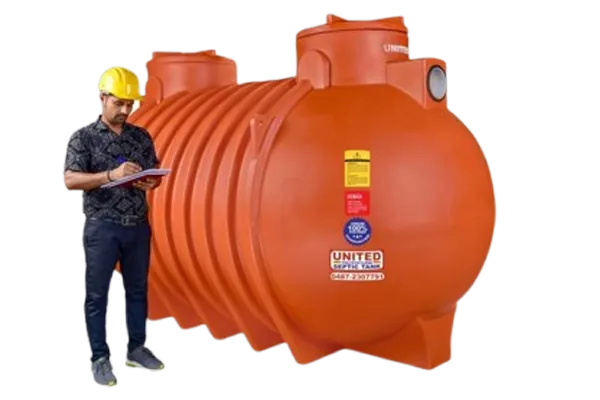
UNITED Polyethylene Septic Tanks are made in a single moulding. The UV-stabilised, salt-resistant, non-degradable plastic and high wall thickness withstand the load and pressure of the earth.
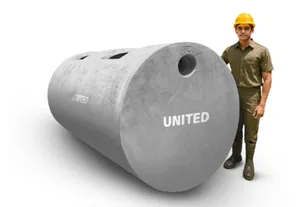
UNITED RCC tanks are not made by conventional moulding. Rich concrete is spun by centrifugal force in a specially designed machine, packing every particle without holes or air pockets for a compact, smooth, leak-proof surface.
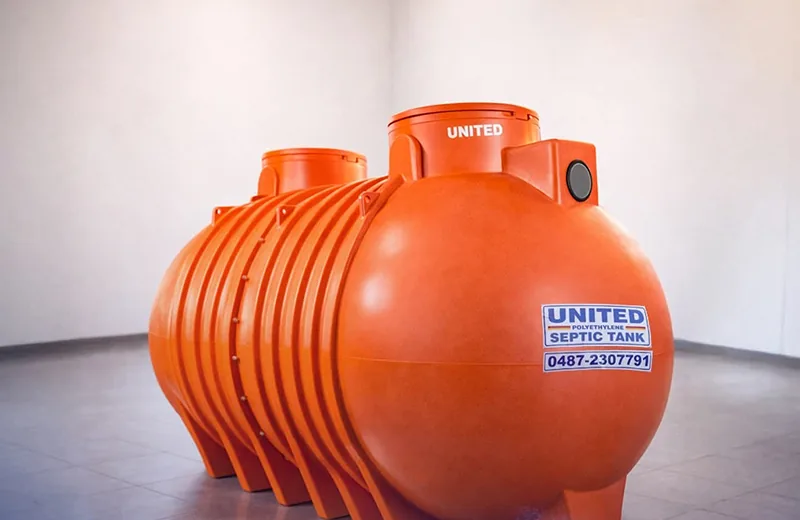
The complete UNITED range in one document: polyethylene and RCC septic tanks, inspection chambers, soakaway rings and modular underground tanks, with model specifications. Ready to share with your architect or contractor.
The process inside a septic tank is carried out by bacteria. Without their work, a tank would fill within a few months.
Pouring soap water, detergent, phenol and other chemicals into the closet destroys the bacteria your tank depends on.
Masonry tanks can crack, leak and let waste water mix with nearby drinking water. A non-corrosive tank without seepage protects the ground around your home.